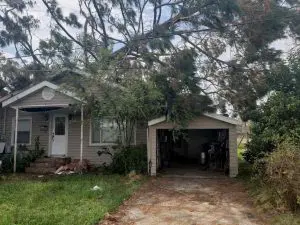

August 28, 2010

Southeast Louisiana Flash Floods & Three Key Steps to Making your Flood Insurance Claim

The National Weather Service in New Orleans has released a flash flood watch and warning for various parishes throughout southeast Louisiana and counties in southern Mississippi through Sunday evening... INCLUDING THE FOLLOWING AREAS... IN SOUTHEAST LOUISIANA... ASSUMPTION... LOWER JEFFERSON... LOWER LAFOURCHE... LOWER PLAQUEMINES... LOWER ST. BERNARD... LOWER TERREBONNE... ORLEANS... ST. CHARLES... ST. JAMES... ST. JOHN THE BAPTIST... ST. TAMMANY... UPPER JEFFERSON... UPPER LAFOURCHE... UPPER PLAQUEMINES... UPPER ST. BERNARD AND UPPER TERREBONNE. IN SOUTHERN MISSISSIPPI... HANCOCK... HARRISON... JACKSON AND PEARL RIVER.

The number of inches of Rainfall for specified durations (of 1, 3 and 6 hours) required to produce flash flooding in Louisiana Parishes and Mississippi Counties can be found at NOAA's flash flood guidance .

The National Flood Insurance Program three key steps for filing your flood insurance claim.

STEP ONE:

After experiencing a flood, contact your agent or insurance company to file a claim. An adjuster should contact you within a few days of filing your claim. If you do not hear from an adjuster, you can contact your insurance agent or company again. Make sure you have the following information handy:

•The name of your insurance company
•Your policy number
•A telephone and/or email address where you can be reached at all times

STEP TWO:

Separate damaged from undamaged property. Your adjuster will need evidence of the damage to your home and possessions to prepare your repair estimate.

•Take photographs of all of the damaged property, including discarded objects, structural damage, and standing floodwater levels.
•Make a list of damaged or lost items and include their date of purchase, value, and receipts, if possible.
•Officials may require disposal of damaged items so, if possible, place flooded items outside of the home.

STEP THREE:

Your adjuster will provide you a Proof of Loss form--your official claim for damages. You'll need to file this claim with your insurance company within 60 days of the flood. This document substantiates the insurance claim and is required before the National Flood Insurance Program (NFIP) or insurance company can make payment.

You'll receive your claim payment after you and the insurer agree on the amount of damages and the insurer has your complete, accurate, and signed Proof of Loss form. If major catastrophic flooding occurs, it may take longer to process claims and make payments because of the sheer number of claims submitted.

August 5, 2010

NOAA Still Expects Active Atlantic Hurricane Season; La Niña Develops

The Atlantic Basin remains on track for an active hurricane season, according to the scheduled seasonal outlook update issued today by NOAA's Climate Prediction Center, a division of the National Weather Service. With the season's peak just around the corner - late August through October - the need for preparedness plans is essential.

NOAA also announced today that, as predicted last spring, La Niña has formed in the tropical Pacific Ocean. This favors lower wind shear over the Atlantic Basin, allowing storm clouds to grow and organize. Other climate factors pointing to an active hurricane season are warmer-than-average water in the tropical Atlantic and Caribbean, and the tropical multi-decadal signal, which since 1995 has brought favorable ocean and atmospheric conditions in unison, leading to more active seasons.

"August heralds the start of the most active phase of the Atlantic hurricane season and with the meteorological factors in place, now is the time for everyone living in hurricane prone areas to be prepared," said Jane Lubchenco, Ph.D., under secretary of commerce for oceans and atmosphere and NOAA administrator.

Across the entire Atlantic Basin for the whole season - June 1 to November 30 - NOAA's updated outlook is projecting, with a 70 percent probability, a total of (including Alex, Bonnie and Colin):

•14 to 20 Named Storms (top winds of 39 mph or higher), including:
• 8 to 12 Hurricanes (top winds of 74 mph or higher), of which:
• 4 to 6 could be Major Hurricanes (Category 3, 4 or 5; winds of at least 111 mph)

These ranges are still indicative of an active season, compared to the average of 11 named storms, six hurricanes and two major hurricanes; however, the upper bounds of the ranges have been lowered from the initial outlook in late May, which reflected the possibility of even more early season activity.

"All indications are for considerable activity during the next several months," said Gerry Bell, Ph.D., lead seasonal hurricane forecaster at NOAA's Climate Prediction Center. "As we've seen in past years, storms can come on quickly during the peak months of the season. There remains a high likelihood that the season could be very active, with the potential of being one of the more active on record."

Be prepared for the hurricane season with important information available online at hurricanes.gov/prepare and at FEMA's ready.gov.

August 3, 2010

United Policy Holders: Avoid Words Like "Flood" and "Mold" when Reporting a Homeowners Insurance Claim

In a recent New York Times article, Amy Bach of United Policyholders provided tips concerning words to avoid when speaking with your insurance representative about a homeowner's insurance property damage claim.

United Policyholders is a a nonprofit group focused on educating consumers about insurance.

Amy says to avoid words like "flood" and "mold" and use language like "There has been an accident at my house, on my property and my property has been damaged, and I'm filing a claim."

July 24, 2010

As Second Anniversary Approaches, It May Not Be Too Late to File Your Hurricane Gustav Insurance Lawsuit


The second anniversary of Hurricane Gustav is quickly approaching. Many have still not recieved their supplemental insurance proceeds. Some have been denied. It may not be too late to file your Hurricane Gustav Insurance Lawsuit. If you still do not have enough money to fix your home or business property damage, or have not yet been fully compensated for your business losses or contents claims, or have not been able to afford replace your damaged asbestos slate or terracotta roof, Louisiana Revised Statute 22:868 provides for a period of "twenty-four months next after the inception of the loss" to file a lawsuit for certain types of claims.

Of course, if you wish to pursue a Hurricane Gustav insurance lawsuit, gather your insurance company's estimate and your policy together and hire an attorney immediately to protect your interests as you may be facing very important legal deadlines.

Resources:

Louisiana Revised Statute 22:868

Louisiana Revised Statute 22:47

Louisiana Revised Statute 22:1692

Hurricane Insurance Claims

June 27, 2010

Will Flood Insurance Pay if BP Crude Oil Mixes with Flood Water and Damages Your Home?

The National Flood Insurance Program has clarified that its flood insurance policies will cover BP Oil spill contaminated flood water with the following limitations:


  • There must first be a definitional flood as described in the Standard Flood Insurance Policy (SFIP). Damage caused by the oil in flood waters is covered subject to the provisions of the SFIP.

  • Under the terms of the SFIP's General Property Form (commercial buildings and contents - both coverages must be purchased separately), damage caused by pollutants is limited to $10,000.

  • The Dwelling Form and the Residential Condominium Building Association Policy Form limit damage to the building contents (both coverage must be purchased separately) from pollutants to the policy limits.

  • Damage to ground, soil, or land caused by flood, oil, or flood water mixed with oil is not covered.

  • The cost of complying with any local or State ordinance including one that requires special removal methods for oil is specifically excluded (certain floodplain management mitigation requirements are exceptions). This exclusion would also apply to local or state condemnations--the NFIP only pays for direct physical loss by or from flood.

  • All three forms--no coverage for testing for or monitoring of pollutants unless there is a law or ordinance requiring it.

  • If payment is made, FEMA or the WYO is automatically subrogated to the policyholder's right to recover the payment from a responsible party. The policyholder may not give up FEMA's or the WYO's right to recover or do anything that would prevent FEMA or the WYO from recovering. If the policyholder makes any claim against any person who caused the loss and recovers any money, the policyholder must pay FEMA or the WYO back first before the policyholder may keep any of that money.

Additional Resources:
FEMA provides a position on potential oil mixed with flood waters.pdf

June 4, 2010

The Louisiana Department Of Insurance Helpful Hurricane Season Publications

Now that Hurricane season is here, there are several helpful publications prepared by The Louisiana Department Of Insurance that you may wish to review for informaiton about homeowners, flood and business interruption insurance as well as how to prepare for both before and after the storm. These publications include:

Hurricane Tracking Map and Preparedness Guide.pdf

After the Hurricane Hits.pdf

Weathering the Storm.pdf

What should I do if my property is flooded.pdf

Consumer 101 Fliers for Hurricane Season.pdf


May 31, 2010

National Flood Insurance Program's Authority To Issue New Policies Lapses At Midnight

The NFIP will not be reauthorized by Congress by midnight of May 31, 2010. Therefore, the Program will experience a hiatus - a period without authority to:

  • issue new policies for which application and premium payment dates are on or after June 1, 2010, or
  • issue increased coverage on existing policies for which endorsement and premium payment dates are on or after June 1, 2010, or
  • issue renewal policies for which the renewal premium is received by the company on or after June 1, 2010, and after the end of the 30-day renewal grace period, until Congress reauthorizes the Program.

While awaiting Congressional reauthorization, FEMA is issuing the guidance contained in the attached bulletin Within this bulletin, is a set of Frequently Asked Questions concerning NFIP authorization.

The hiatus period is expected to end soon.

May 31, 2010

NOAA Is Predicting An "Active To Extremely Active" 2010 Hurricane Season for the Atlantic

hurricane_ike_300.jpgThe National Oceanic and Atmospheric Administration is predicting an "active to extremely active" 2010 hurricane season for the Atlantic with 14 to 23 named storms this season, of which 8 to 14 will turn into hurricanes and 3 to 7 of those will grow into major hurricanes with sustained winds of at least 111 miles per hour.

Colorado State University forecasters have issued similar predictions: 15 named storms, 8 hurricanes and 4 major hurricanes.

Additional Resources:

National Oceanic and Atmospheric Administration

Colorado State University's Tropical Meteorology

May 23, 2010

Hurricane Preparedness Week during 2010 will be held May 23rd through May 29th

In connection with Hurriicane Preparedness Week, NOAA is providing information on its website to save lives at work, home, while on the road, or on the water durring Hurricane season. NOAA says before a Hurricane threatens, you should be able to answer the following questions:

  • What are the Hurricane Hazards?
  • What does it mean to you?
  • What actions should you take to be prepared?

Hurricane hazards include: storm surge, high winds, tornadoes, and flooding. Your family should plan for all of these hazards and use common sense.

April 26, 2010

Louisiana Senate Passes Bill To Limit Insurance Policy Cancellations Due To Problem Chinese Drywall

The Louisiana Senate today passed Louisiana Senator Julie Quinn's bill that could potentially protect homeowners in this state from suffering the consequences of making an insurance claim on a home containing Chinese drywall. This bill would prevent insurance companies from dropping homeowners, increasing premiums, and refusing to renew policies on homes constructed with this material. The legislation is not watertight, but if it is passed, it would provide Louisiana homeowners with some more breathing room and increased assurance that they won't lose insurance for making a claim.

The U.S. Consumer Product Safety Commission (CPSC) describes Chinese drywall as an imported material that can cause a myriad of problems in homes. Telltale signs of Chinese drywall include "blackened and corroded metal," electrical failures/hazards, and health issues (such as breathing problems and itchy skin). This drywall was installed in American homes with dangerous frequency throughout the 2000s, and in the post-Katrina/Rita Gulf Coast area in particular. It is less expensive than regular drywall and, at the time it was widely purchased and installed, its ill effects were not widely known.

Many Louisiana homeowners, in the wake of widespread media coverage regarding Chinese drywall, have discovered the presence of this material in their homes and gone on to make claims with their insurance companies. Unfortunately, a number of these insurance companies have reacted in a way that discourages homeowners from filing valid claims. Insurance companies have withdrawn policyholders' coverage, increased the premium rates on policies, and refused policy renewals for a number of Louisiana homeowners based on the presence of Chinese drywall in their homes. Senator Quinn's bill asserts that if such practices continue, insurance companies will be fined $1,000 for each incident. Fines would not apply to an insurance company which "allows the cancellation, nonrenewal, or increase in premium on an area-wide basis at the beginning of a new policy period."

This development is encouraging, considering that it will encourage Louisiana homeowners to improve their property's quality, not to mention avoid health risks, by making claims that could remove Chinese drywall from their homes. Moreover, insurance companies won't be devastated by this potential bill, as the financial repercussions should not be severe enough to affect their actual capital, according to Moody's Investors Service. The greatest risk to homeowners that could stem from this bill is in the assertion that insurance companies could return to their previous behavior on an "area-wide basis" when policy periods are up. Louisiana homeowners need to pay attention to these developments in the upcoming years if the bill is passed, and ensure that they are diligent about whether or not their insurance company will fault them for Chinese drywall, regardless of the fines their insurer would incur.


April 3, 2010

"Rip Out Problem Chinese Drywall"- Federal Agencies Recommendation To Chinese Drywall Victims

The Consumer Products Safety Commission ("CPSC") and the Department of Housing and Urban Development ("HUD") have issued Interim Remediation Guidance that advises Chinese drywall homeowners to remove all possible problem drywall from their homes, and replace electrical components and wiring, gas service piping, fire suppression sprinkler systems, smoke alarms and carbon monoxide alarms.

Taking these steps should help eliminate both the source of the problem drywall and corrosion-damaged components that might cause a safety problem in the home.

Most Chinese drywall victims report that their homes were built in 2006 to 2007, when an unprecedented increase in new construction occurred in part due to the Hurricanes Katrina, Rita and Wilma. Common to many reports submitted to the CPSC regarding homes believed to contain problem drywall have been the following:

  • "Rotten egg" smell within the homes;
  • Health concerns such as irritated and itchy eyes and skin, difficulty in breathing, persistent cough, bloody noses, runny noses, recurrent headaches, sinus infection, and asthma attacks;
  • Blackened and corroded metal components in their homes and the frequent replacement of components in air conditioning units.


Additional Resources:

How to Identify Problem Chinese Drywall

CPSC & HUD Interim Remediation Guidance

March 30, 2010

Caddo Parish and Bossier Parish- Louisiana Hail Insurance Claims

Residents in northern Louisiana, Shreveport in particular, recently experienced a severe storm that brought significant amounts of hail to the area. Although hail is not as pressing of a threat in Louisiana as it is on the Great Plains (a region that is dubbed "Hail Alley" by the Weather Channel), the damage it causes should still not be taken lightly.

The effects of hail are not always obvious to the casual observer. In extreme cases, hail can destroy structures, break windows, and leave behind unmistakable wreckage. When a hail storm is not so clearly destructive, however, it can damage buildings in such a way that homeowners may not see the need for repairs. Roof damage that results from hail is especially hazardous, because it can cause leaks, structural problem, depreciate a home's value, and it may not appear serious. Photographs of roofs after a hail storm illustrate how shingles, after being peppered with hail, sometimes show nothing more than small circular dents or marks. A homeowner may not notice this damage, or assume that it does not warrant further inspection.

Homeowner's insurance policies in Louisiana do not always include hail damage, which is usually a subsidiary of "wind damage" in policies. If this is the case, such coverage can be purchased separately at extra cost. The costliness of this extra insurance may be exacerbated by insurance companies' treatment of hail damage claims. In Louisiana, deductibles may be percentage based rather than flat rate, corresponding to the home's value and, more often than not, burdening the homeowner with a more substantial out of pocket deductible.

The type of roof is another factor regarding hail damage. Fiberglass shingles are definitively less expensive than many other types of roofing, and are relatively simple to repair or replace. At the opposite end of the financial spectrum, terra cotta and slate roofs can be very expensive if they are damaged. Terra cotta is high in cost, limited in availability, and requires more skill to install or repair the material. Typically, if one shingle on an asbestos slate roof is cracked by hail, the insurance company must pay for the entire roof. A comparable shingle of like kind and quality might be a slate composite shingle like Lamarite. The cost of terra cotta and slate is often double, triple or even quadruple the cost of a shingle roof.

This discrepancy in cost is not overlooked by insurance companies in Louisiana. If your more expensive roof is damaged by hail, an adjustor may suggest that vinyl or fiberglass shingles are your only option for replacement. Such a situation is far more cost-effective for insurance companies, but for the homeowner who is already saddled with a hefty deductible, the prospect of downgrading (and potentially decreasing his home's value with the roofing change) should not be entertained.

If a claim is made, and the insurance company insists upon a reduction in roofing quality, homeowners should pursue further negotiations with their insurance company's adjuster. If all else fails, you may want to speak with your Louisiana insurance lawyer.

Additional Resources:

Storms Bring Hail To Northwest Louisiana (Shreveport Times)

What is Hail?

Photos of Hail Damaged Roofs

Some Louisiana Coastal Policies May Exclude Wind & Hail- Storm Advice For Louisiana Insurance Consumers

Percentage Based Home Insurance Deductibles

State of Louisiana Consumer's Guide To Homeowners Insurance

Understanding Hail Damage & Impacts

March 16, 2010

Louisiana Flood Insurance Through The National Flood Insurance Program

If you are a homeowner in Louisiana, the possibility that your property may be affected by a flood is an unfortunate reality. There are physical measures a homeowner can take to protect his property against the threat of a flood, but the prospect that structural mitigation may not be enough should compel a homeowner to seek flood insurance. In this situation, National Flood Insurance Program (NFIP) policies most often come into play.

According to the NFIP, a flood exists "where two or more acres of normally dry land or two or more properties are inundated by water or mudflow." GOHSEP (Governor's Office of Homeland Security and Emergency Preparedness) expands upon this definition to describe how a flood is typically an external event. If the dam or levee behind your property breaks and your home is inundated with water, it is considered a flood. On the other hand, if your pipes burst and your home sustains water damage, it is not a technical flood. Insurance policies for property owners reflect this distinction. When a home is damaged by a legitimate flood, it is a matter for the NFIP to handle. If a home is affected by water, mud or other runoff material not resulting from an actual flood, then it would relate to homeowner's insurance, not the NFIP.

When a homeowner in a "moderate-to-low risk area" applies for flood insurance with the NFIP, he has more than one coverage option. Building and contents can be offered in one premium package, and the NFIP offers additional choices to alleviate the financial burden that flood insurance places on a homeowner. Many Louisiana homeowners do not fit this "moderate-to-low risk" standard. The Preliminary Digital Flood Insurance Rate Maps (DFIRMs) currently used by FEMA and the NFIP illustrate that much of the state is categorized as "high risk." Louisiana homeowners might balk at the price tag for flood insurance, but they may have no power to reject it. The NFIP stipulates that if you are in a high risk area, and your mortgage was acquired through a "federally regulated or insured lender," you must insure your property.

What happens once insurance has been obtained? When flood damage occurs, and the insured approaches the NFIP with a flood claim, he may find that his comprehensive insurance policy does not account for everything. Precious metals, septic systems, and temporary living expenses are among the items not covered by the NFIP. Louisiana homeowners should take care to scrutinize their coverage, or lack thereof, with their agent..

Cost is another factor that must be taken into consideration. NFIP policy rates vary, and a homeowner does have a number of coverage options to choose from, but flood claims are capped at $250,000 for building and $100,000 for contents. Moreover, the annual premiums, and the homeowner's deductible, are costlier in the A and V flood zones (high risk and coastal areas) which comprise much of Louisiana's geography. In a low-risk flood zone, for instance, a homeowner who purchases maximum coverage for building and contents on his property pays an annual premium of $348 or $388, depending upon whether or not he has a basement. The same policy in an A zone costs $2,647, and $5,714 in a V zone. If a homeowner feels that he is still left too vulnerable by the NFIP's coverage limits, he can also purchase "excess" flood insurance, which is offered through a number of general insurance providers in Louisiana. These supplemental policies offer coverage beyond the $250,000 and $100,000 maximums, but they are frequently more expensive. The Louisiana homeowner may find it necessary to purchase an NFIP policy, and perhaps supplemental insurance as a safeguard against flooding, but such precaution certainly does not come cheap.


Additional Resources:

Flooding & Flood Risks Overview

Louisiana Governor's Office of Homelland Security & Preparedness

Louisiana Mapping Project-Charting Our Coastal Future

FEMA- The National Flood Insurance Program


March 3, 2010

Expired National Flood Insurance Program Is Reauthorized Creating a Possible Two Day Lapse In Coverage; Congress Fails To Overhaul NFIP System

Today, Congress reauthorized the National Flood Insurance Program that expired last Sunday night when Congress failed to pass a temporary extension of the program. The reauthorization is not retroactive. The expiration did not affect existing coverage. However, for the two days period the NFIP did not issue new policies or renew policies, some may have sustained a lapse in coverage. Some home sales were even delayed because some lenders require flood insurance as a term of the mortgage.

The National Flood Insurance Act of 1968 provided insurance against inundation from rising waters or from the overflow of streams, rivers, or other bodies of water, or from tidal surges, abnormally high tidal water, tidal waves, tsunamis, hurricanes, or other severe storms or deluge.

The reauthorization extended the NFIP through March 28, 2010. Congress has extended the existing program several times while working on various proposals to reform the entire system. There are several pending overhaul bills in both the House and Senate. Some of the reform bills seek to expand the flood program to include wind coverage. The National Association of Insurance Commissioners has even promoted the idea of offering coverage for all catastrophic perils.

In the meantime, the NFIP only applies to flood. The NFIP has just released its May, 2010 Revision to the Flood Manual as well as Wind vs. Water Adjusting Practices.

Additional Resources:

NFIP Reauthorzation Through March 28, 2010

Expired NFIP Program Delays Louisiana Real Estate Transactions

NAIC's Proposal For Creating A Comprehensive National Plan To Address Catastrophic Risks

National Flood Insurance Act of 1968 and Flood Disaster Protection Act of 1973, As Amended

February 1, 2010

Federal Court Decides Hurricane Katrina Insurance Lawsuit Filed More Than Two Years After Hurricane Anniversary Prescribed

In Dixey, II v. Allstate Insurance Company, --F.Supp.2nd, 2010 WL 126628 (E.D.La.), plaintiff filed his Hurricane Katrina insurance lawsuit after the second anniversary of Hurricane Katrina and attempted to use the Louisiana class action statutes to demonstrate that his claim had not prescribed. The Court determined the claim had prescribed finding the "liberative prescription" set forth in LA-CCP art 596 is not applicable to the "contractual prescription" set forth in the policy. Allstate maintained that contractual limitation period set forth in its policy cannot be interrupted or suspended.

This decision is wrong. The Court failed to recognize that the twelve month provision in the contract is also a liberative prescriptive period. It is not in the language of the insurance company; rather, it is the language of the Legislature and expressed in words which the fire statute (LA-RS 22:691(F)) requires be inserted in the policy, word for word, line for line, number for number. See, Gremillion v. Travelers Indemnity Co., 240 So.2d 727, 256 La. 974 (1970). Further, the court must strictly construe the statute against prescription and in favor of the claim that is said to be extinguished and CC 3457 provides there is no prescription other than that established by legislation.

Additionally, in 2006 oral argument before the Louisiana Supreme Court, Allstate, State Farm and USAA, the three remaining defendants in a Hurricane Katrina lawsuit, even acknowledged the applicable limitation period is a liberative prescriptive period and capable of being suspended under the doctrine of contra non valentem. See, FN13 State v. All Property And Casualty Insurance Carriers Authorized And Licensed To Do Business In the State, 937 So.2d 313, 2006-2030 (La. 8/25/06) at 327. In footnote 13, that Court stated,

The defendants argue that the Acts at issue were unnecessary as Louisiana law already contains the means for persons prevented from filing suit to avoid dismissal of their claims due to prescription. Specifically, the defendants point out that the doctrine of contra non valentem applies to prevent the running of liberative prescription where, in fact and for good cause, a plaintiff is unable to exercise his cause of action when it accrues. As was discussed in oral argument, determinations of whether contra non valentem applies generally proceeds on an individual, case-bycase basis. In order to avoid mass confusion and an increase in filings in our courts, the Legislature addressed this significant public concern in an appropriate manner.